


Trusted By
Over 3,500 churches worldwide.

Assessments
Designed for churches of every size.

Executive Roles
Filled 40% faster than internal searches

Average Staff Satisfaction
Is 72% higher with our guidance.
Building Stronger Ministry Teams Through Intentional Culture
At Vanderbloemen, we know church culture sets the tone for everything that happens in ministry. We partner with churches, schools, nonprofits, and values-based organizations across the country and internationally to deliver church culture assessments rooted in biblical principles and organizational best practices. Each assessment offers more than surface-level feedback. Leaders receive specific steps, practical tools, and clear guidance to create workplaces where staff thrive, leaders grow, and the mission advances with strength.
How Healthy Is Your Team?
Get Real Answers Based on Real Data.
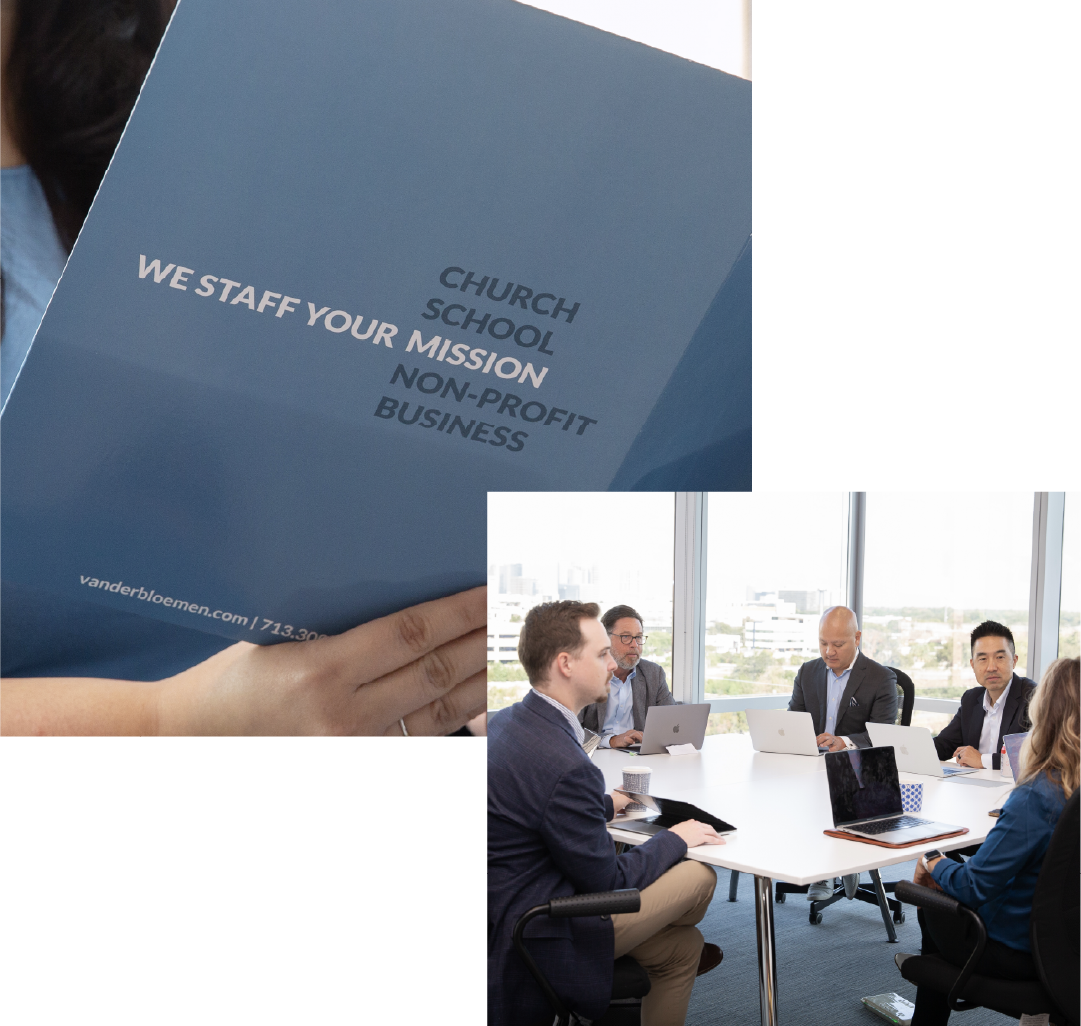
Building a great team isn’t just about hiring the right people, it’s about keeping them engaged and satisfied. The culture assessment is a comprehensive and anonymous staff engagement study that measures your team’s health across nine key cultural indicators, comparing your organization’s results to the industry average. Your team will share honest, detailed insights about their experiences, offering you a true reflection of your team’s culture.
-
 1. Leadership
 -
 2. Stewardship of Life
 -
 3. Communication
 -
 4. Your Role
 -
 5. Innovation
 -
 6. Support
 -
 7. Collaboration
 -
 8. Personal Satisfaction
 -
 9. Mission, Vision & Values


Choose the Right Plan for Your Ministry
Select the package that matches your needs to begin your survey and receive a personalized culture assessment report.
Culture assessment
$1,000
- Your staff culture health score
- Your strongest and weakest culture indicators
- Identifiable patterns in your organization
- A deep analysis that is customized to the most critical areas of your organization’s culture
Culture assessment & report review
$2,000
- Get one-on-one analysis of your report with a one-hour zoom call
- Your staff culture health score
- Your strongest and weakest culture indicators
- Identifiable patterns in your organization
- A deep analysis that is customized to the most critical areas of your organization’s culture
Why a Culture Assessment Matters
Knowing the true state of your church culture is vital for long-term health and growth. A culture assessment helps leaders see what is working, where challenges exist, and what changes are needed. It clarifies the difference between aspirational values and actual behaviors, and equips leadership to respond with meaningful action. Below are key advantages:
Spot Hidden Cultural Challenges Early
Cultural problems often remain unseen until they damage morale or performance, and spotting them can be difficult for both leaders and staff. A culture assessment surfaces early warning signs such as disengagement, poor teamwork, or unclear values before they grow into larger challenges.
Reveal Root Causes of Dysfunction
Conflict within teams or high turnover is often a signal of deeper cultural problems. Through focused analysis, a culture assessment traces issues back to their source, whether that involves poor communication, unhealthy leadership behaviors, or unspoken expectations.
It’s vital to create opportunities for open discussion between leaders and staff, allowing everyone to reflect on the findings together so that root causes can be addressed and a healthier church environment established.
Highlight Cultural Strengths Worth Building On
Not every discovery points to a weakness. Many reveal areas of health, such as effective leadership, inclusive practices, or strong team dynamics that can be leveraged across the organization.
Churches can apply what they learn from these strengths to other areas, using tested practices to encourage growth and support a more vibrant and healthy church culture.
Why Faith-Based Organizations Choose Us
We have guided hundreds of churches toward healthier cultures by aligning leadership, values, and mission with biblical priorities. Nurturing a healthy church culture is vital because it shapes engagement, outreach, and the impact of ministry itself. With something as significant as culture, generic business advice is not enough. Core values such as prayer, love, and faith must guide every aspect of ministry, and the way your church operates should reflect those commitments.
Our approach is defined by three qualities:
-
 Ministry-First Perspective
 -
 Relational Approach
 -
 Practical Wisdom

Words from Those Who Know Us Best

“We’ve worked very hard on our staff culture over the years and Vanderbloemen’s culture assessment has helped identify what we do well and what we need to keep working on. This is our fourth year using it!”

“We chose Vanderbloemen because of previous experience hiring our lead pastor. Our consultant was great; they listened well and did not give up searching for just the right fit for our congregation.”

“Vanderbloemen has proven themselves to be a trusted source of experience and provides excellent service. They are dedicated and intimately involved in the search process. They have delivered results, and we have turned back to them on several occasions.”

“Change brings questions, and questions cause confusion. In such times, a fresh perspective is invaluable. Vanderbloemen has provided this counsel for thousands of churches – including ours.”

“In addition to finding a great candidate, our consultant was great about checking in on us and offering advice as we were going through a very difficult season.”
Frequently Asked Questions Regarding Church Culture Assessment
-
What is a church culture assessment?
A church culture assessment is a detailed review of your ministry’s overall health, looking at how values, practices, communication, and leadership shape the environment of your church. It highlights cultural strengths worth celebrating as well as opportunities for growth, providing leaders with a roadmap for building a healthier ministry culture rooted in mission and biblical principles. A healthy church culture not only strengthens the congregation but can also impact the community by drawing those who are seeking authenticity, transformation, and renewal.
-
How long does your culture assessment process typically take?
Our standard culture assessment takes about 4–6 weeks from the first consultation to the delivery of the final report. The process includes onsite visits, staff interviews, congregational surveys, and leadership team workshops. For larger churches or multi-campus ministries, the timeline may extend to 8–10 weeks to allow for complete data collection and thoughtful analysis.
-
What methods do you use to assess church culture?
We use a multi-layered approach that includes confidential staff surveys, personal interviews, focus groups, ministry observation, leadership assessments, and congregational feedback tools. This mix of quantitative and qualitative data provides a complete view of church culture from every perspective within the ministry.
-
How often should churches evaluate their culture?
We recommend churches conduct a comprehensive culture assessment every 3-4 years, with lighter annual pulse checks in between. Churches should also consider assessment during significant transitions (new senior leadership, major growth phases, after conflict resolution), when launching new ministry initiatives, or when experiencing unusual staff turnover or declining engagement.
-
How do we address negative findings in our culture assessment?
Responding to challenges begins with honest leadership acknowledgment and transparent communication about both strengths and areas of concern. We provide a prioritized action plan with clear steps, including guided conversations, updated policies, leadership training, and follow-up assessments to track progress and maintain accountability throughout the change process.
-
What kind of questions should a church ask a pastoral candidate?
Churches should ask theological, ministry philosophy, practical, and personal questions to fully understand a candidate’s beliefs, leadership, and character. Examples include:
- Theological: What is the gospel? Do you affirm this church’s statement of faith?
- Philosophy of ministry: How do you view preaching? What is your perspective on church growth?
- Practical: How would you describe your leadership style? How do you approach conflict in the church?
- Personal: How did you come to faith? How do you care for your spiritual life?
-
How to change the culture of a church?
Transforming church culture requires consistent leadership, clear communication, and intentional modeling of values. Leaders must embody the culture they want to see, direct resources toward it, celebrate healthy behaviors, address misaligned actions, invite feedback, and communicate the mission consistently. Culture shifts through daily choices and actions rather than one-time statements.
Related Culture Assessment Resources
Explore additional insights on building a healthy church culture through our resources, webinars, and expert guidance.
-
How to Become a Pastor in California and Find Your First Church
Read Article: How to Become a Pastor in California and Find Your First Church -

One Letter That Will Land You Your Next Job
Read Article: One Letter That Will Land You Your Next Job -

Lead Pastor vs. Executive Pastor: Understanding the Differences and Similarities
Read Article: Lead Pastor vs. Executive Pastor: Understanding the Differences and Similarities
Build a Thriving Culture That Advances Your Mission
Partner with Vanderbloemen for a church culture assessment that clarifies values, improves alignment, and supports lasting health centered on your mission.
CONTACT US© 2026 Vanderbloemen All Rights Reserved.